
Dive Into Real-time Financial Data Analysis Techniques

Chosen theme: Real-time Financial Data Analysis Techniques. Welcome to a space where market ticks become timely insights, latency is a design goal, and decisions flow at the speed of price. Join the conversation, share your tools, and subscribe for hands-on strategies.

Foundations of Real-time Streaming in Finance

Market data thrives on resilient streams. Combine Kafka for durable ordering, FIX or WebSockets for transport, and Avro or Protobuf for compact, evolvable schemas. This trio reduces tail latency, improves compatibility, and keeps critical tick fields consistent across fast-moving services.

Foundations of Real-time Streaming in Finance

Use tumbling, sliding, or session windows to model execution horizons while handling out-of-order events with watermarks. Align clocks using PTP or GPS-backed NTP, track exchange sequence numbers, and guard calculations against late data that can distort intraday risk or PnL.

Complex Event Processing and Low-latency Features

Stream imbalance, microprice, queue length decay, and spread dynamics to capture microstructure shifts. Maintain rolling levels and depth snapshots, and compute features incrementally so signals stay responsive while avoiding the costly full recomputation that kills latency budgets.

Real-time Models and Online Learning

Use online SGD, adaptive gradient methods, Kalman filters, or libraries like River for incremental predictors. Maintain rolling feature statistics, bound update frequency, and implement rollback paths so a noisy regime change does not push models into unstable behavior.

Real-time Models and Online Learning

Pair an online feature store with your streaming jobs to materialize consistent features for inference and training. Enforce entity keys, version feature definitions, and record lineage so you can reproduce decisions and compare performance across changing market regimes.

Approximate intraday VaR with streaming bootstrap windows, track Greeks under rapidly shifting vol surfaces, and propagate exposure limits per desk. Prioritize deterministic computations and clear fallbacks when market bursts threaten to exceed the latency budgets stakeholders expect.
Build trade surveillance with CEP rules for layering patterns, wash-like activity, and off-venue anomalies. Capture best execution evidence with timestamped quotes and fills, and store audit-grade lineage so compliance reviews are fast, transparent, and defensible during audits.
Design multi-stage alerts with suppression for cascading signals, on-call schedules aware of market hours, and enrichment that explains why. Invite readers to share rules that reduced false positives without missing genuinely dangerous outliers during volatile macro announcements.

Reliability, Latency Budgets, and Data Quality

Synchronize with PTP, validate exchange sequence numbers, and annotate gaps explicitly. During one FOMC spike, backpressure hid a two-second skew; sequence audits revealed it, salvaging PnL and reinforcing the discipline of measuring every millisecond that actually matters.

Dashboards That Inform Without Overwhelming

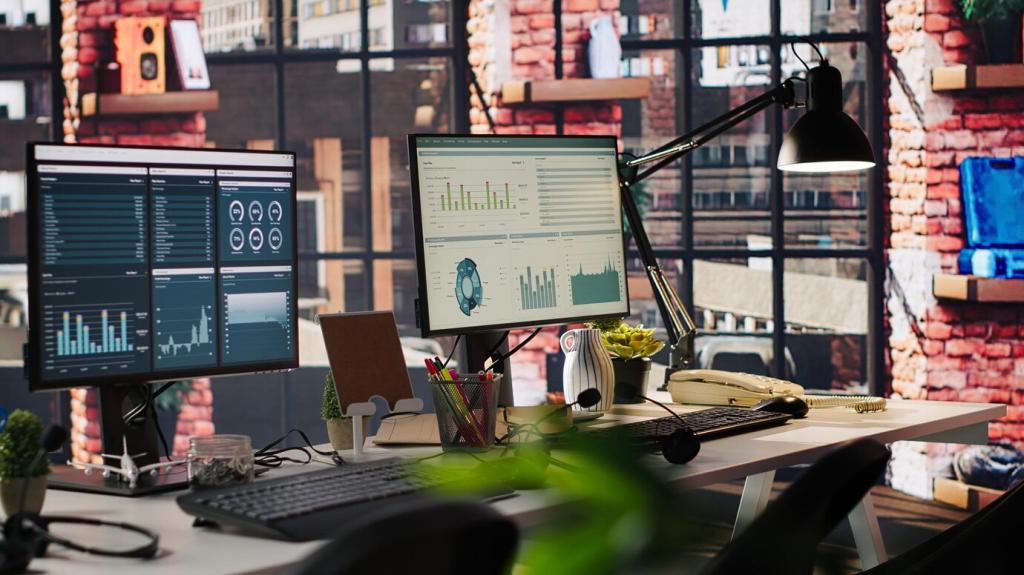
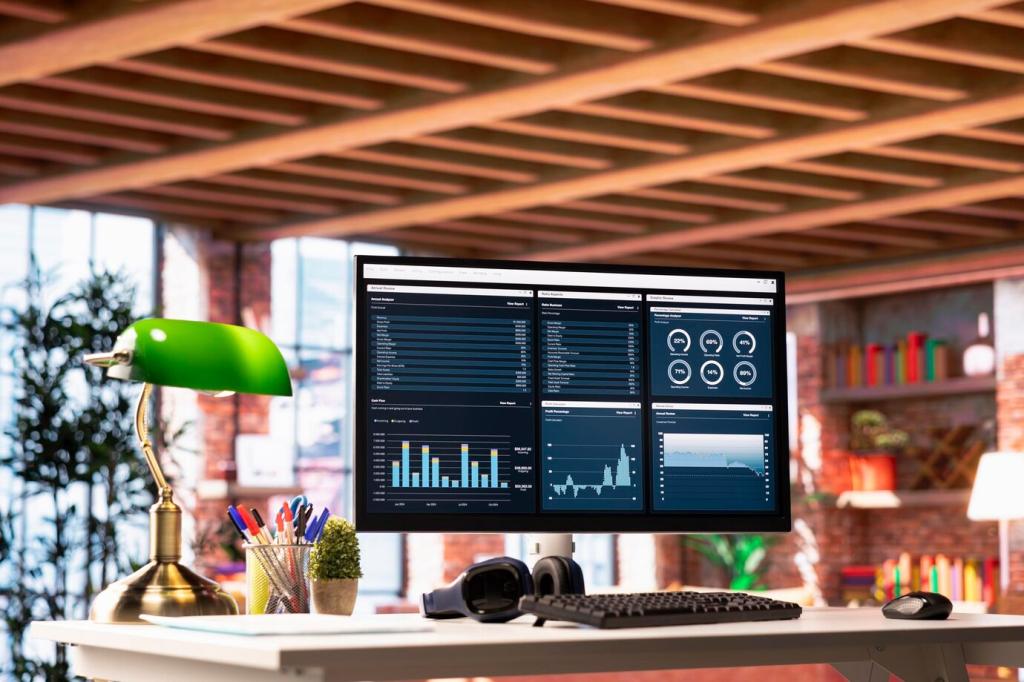
Compose views with meaningful refresh cadences, trend sparklines, and context-aware color. Tools like Grafana or bespoke UIs can stream deltas efficiently. Always prioritize cognitive load, allowing experts to see change first, then inspect details only when needed.

APIs and Delivery Patterns Built for Speed

Expose snapshots plus deltas via WebSockets or server-sent events, using token-based auth and mTLS for sensitive flows. Cache intelligently at the edge, and publish clear SLAs so internal and external consumers align expectations with real operational realities.
Travell-toall
Privacy Overview

This website uses cookies so that we can provide you with the best user experience possible. Cookie information is stored in your browser and performs functions such as recognising you when you return to our website and helping our team to understand which sections of the website you find most interesting and useful.